Skip to content

Max Planck Institute for Empirical Aesthetics

Gruppen_Neuroradiology_cropped

The Max Planck Institute for Empirical Aesthetics (MPIEA) investigates why and how people create art, especially music, and how they perform, experience, and evaluate it.

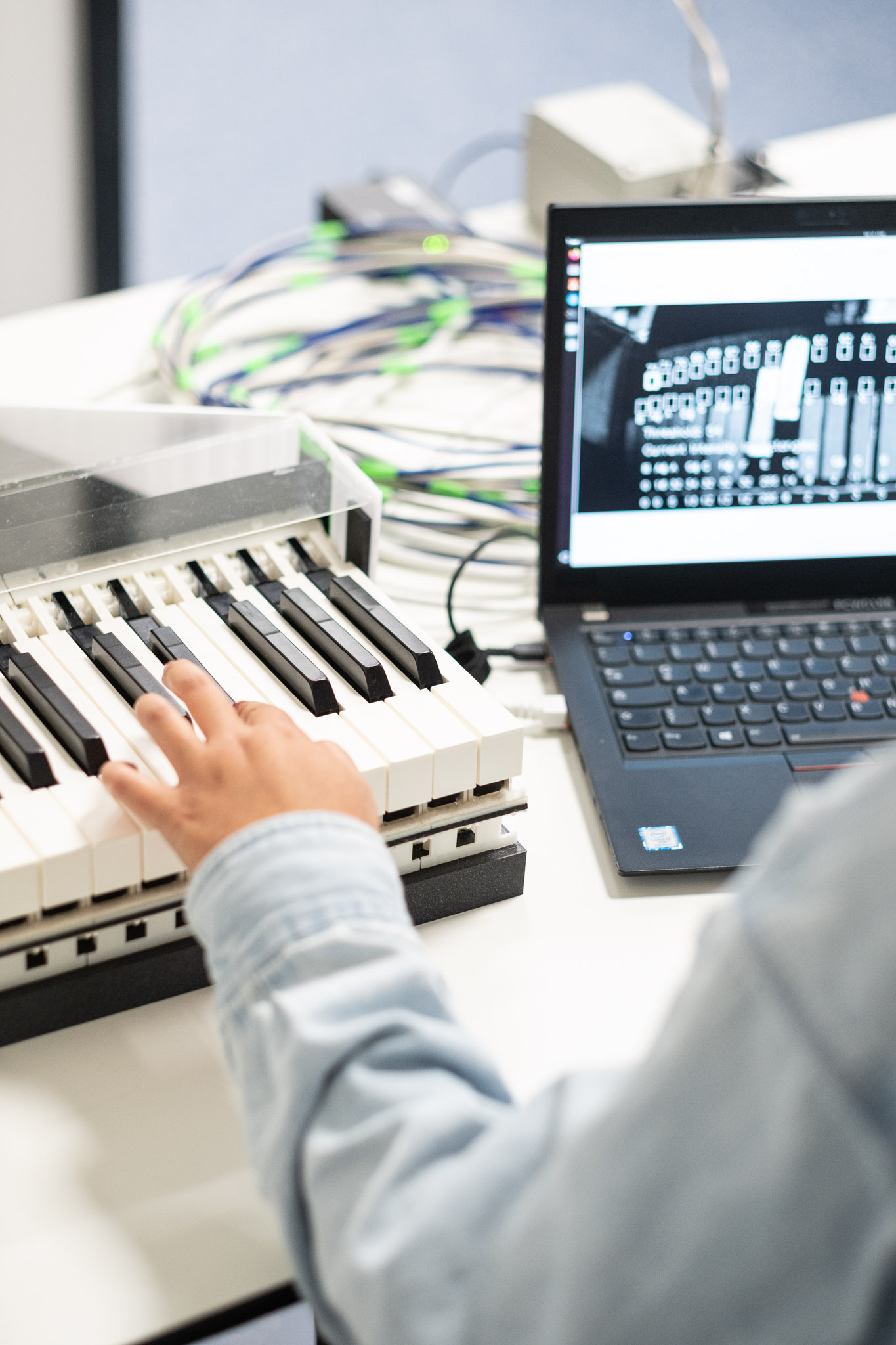
The MPIEA investigates why and how people create, perform, experience and evaluate music, as well as other art forms such as dance or film, using a unique interdisciplinary approach that integrates biological, cognitive and brain sciences.

Our goal is to understand the genetic, neural, and psychological foundations of these abilities as well as how they are shaped by social, cultural, and historical contexts.

Importantly, by using music as a model, we can also study questions of broad general significance for the cognitive sciences, such as mechanisms of skill learning, social interaction, emotional processing and creativity. The MPIEA is one of 85 institutes of the Max Planck Society (MPG), Germany’s leading organization for innovative fundamental research.

Methods
  • Behavioral research and self-reports
  • Electroencephalography (EEG)
  • Magnetoencephalography (MEG)
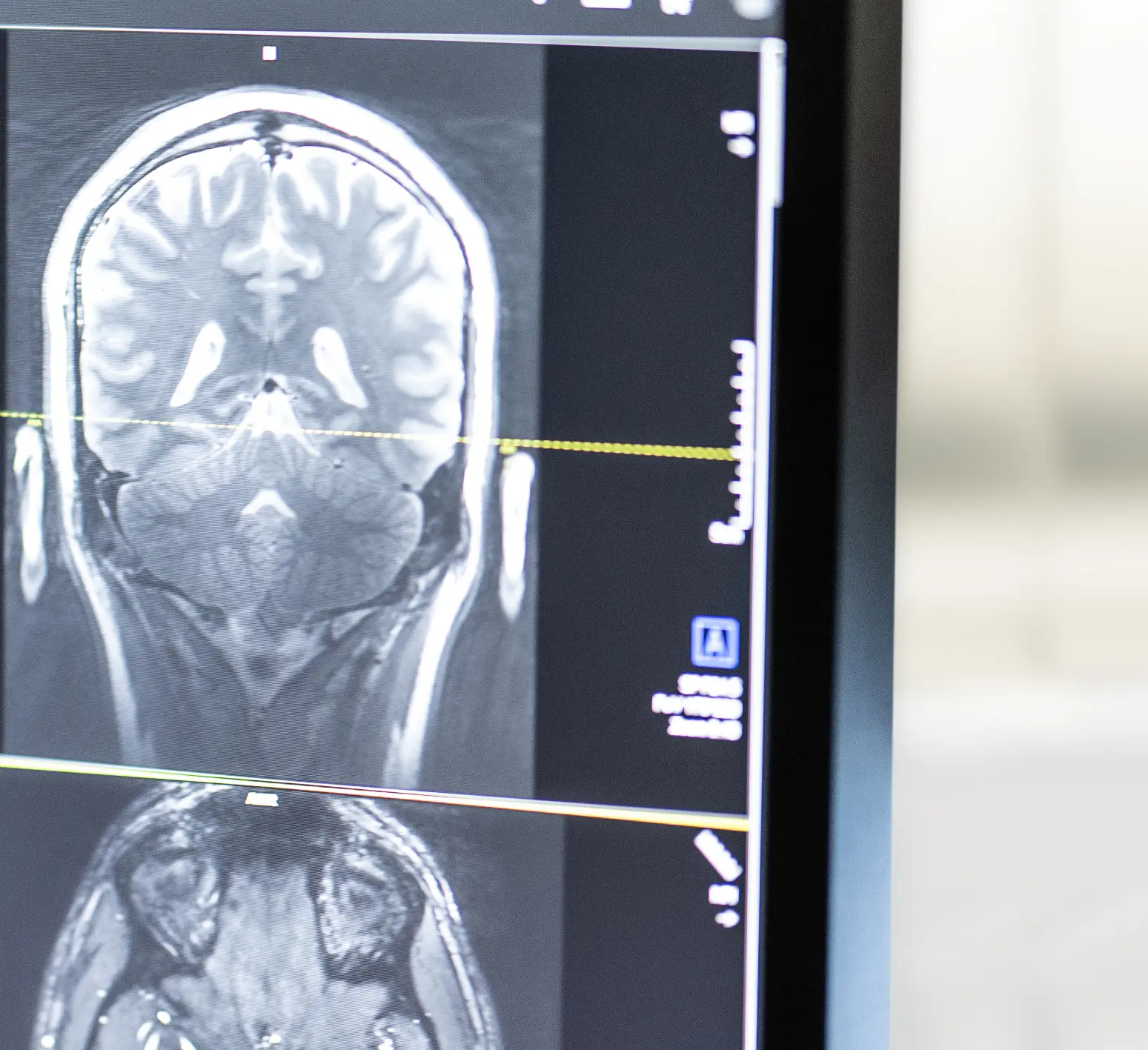
  • Structural and functional Magnetic Resonance Imaging (s/fMRI)
  • Magnetic resonance spectroscopy (MRS)
  • Arterial spin labelling for brain perfusion mapping
  • Eyetracking
  • Physiological Measure-
    ments (e.g., heart rate, breathing, goosebumps)
  • Twin modelling and molecular genetics

Groups

Department of Cognitive Neuropsychology
Prof. Dr. Fredrik Ullén
Director
MPI for Empirical Aesthetics
fredrik.ullenae.mpg.de

Ullen_CoBICwebsite_DSF3678

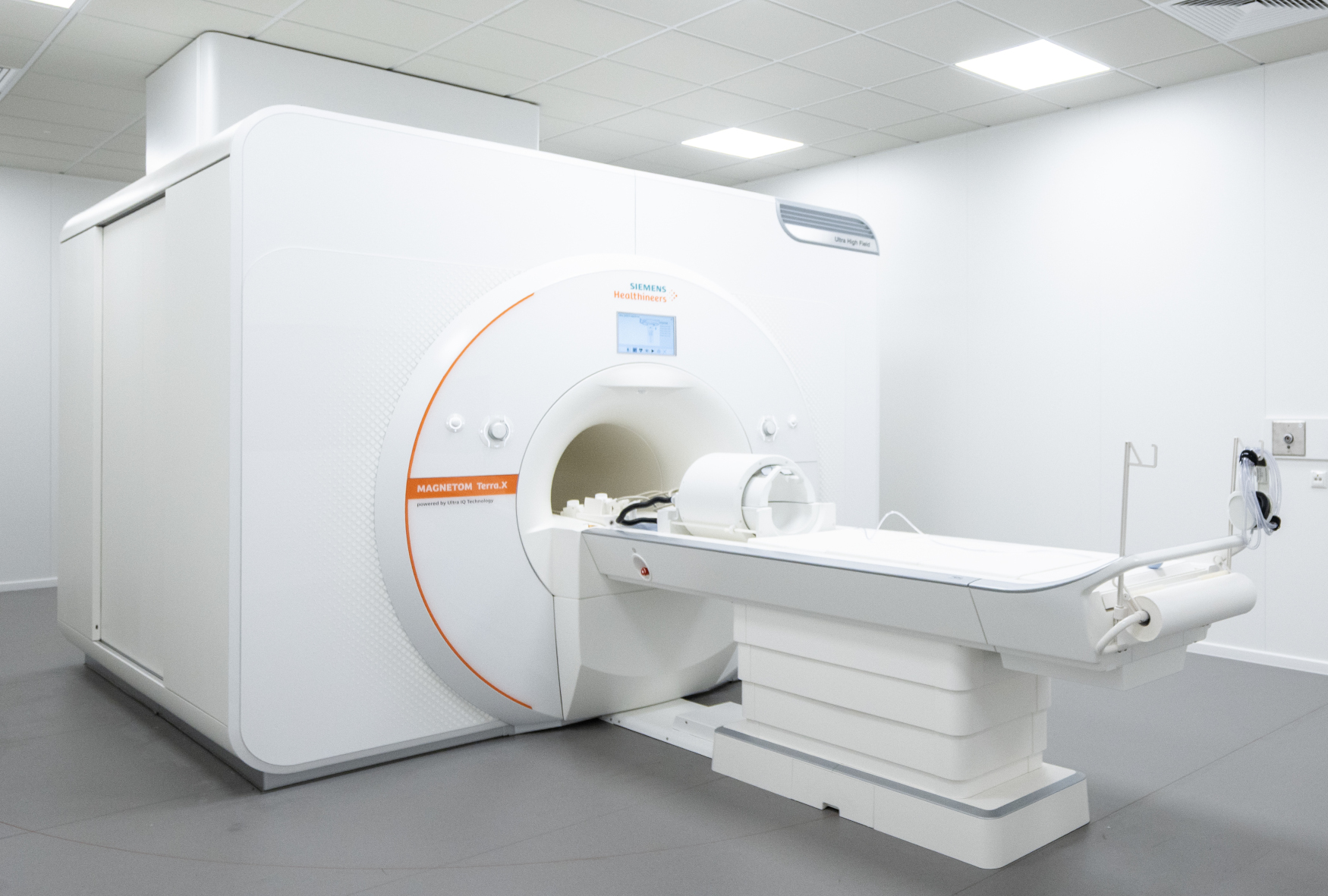
In the Department of Cognitive Neuropsychology, we investigate the neurobiological mechanisms and gene-environment interplay that underlie expertise, skill learning, aesthetic judgment, and creativity. We also study how and why cultural engagement relates to well-being and health. In most of our work, we use music as a model domain. Methodologically, we combine structural and functional neuroimaging with approaches from experimental psychology and behavior genetics. A key focus of our present work is to leverage the exciting possibilities offered by ultra-high field MRI to study the structure and function of the musical brain at a meso-scale resolution.


More information: https://www.aesthetics.mpg.de/en/research/department-of-cognitive-neuropsychology.html

Research Group Neurocognition of Music and Language
apl. Prof. Dr. Daniela Sammler
Group Leader
MPI for Empirical Aesthetics
daniela.sammlerae.mpg.de

Sammler_CoBICwebsite_950x950

The use of music, like language, is rarely a solitary affair. We produce pitches and sounds to have an effect on others’ actions and to evoke emotions, meaning, and understanding. How human brains make sense of music and language, and how both of these are used and produced in social interaction, are questions tackled by the Research Group Neurocognition of Music and Language. Modern neuroimaging, physiological, behavioral and computational methods are the tools we use to map and compare the neural dynamics of music and language, in both perception and (joint) action.


More information: https://www.aesthetics.mpg.de/en/research/research-group-neurocognition-of-music-and-language.html

Minerva Research Group Neural Codes of Intelligence
Dr. Stephanie Theves
Group Leader
MPI for Empirical Aesthetics
stephanie.thevesae.mpg.de


CoBIC-1280-A_cut

The Research Group Neural Codes of Intelligence investigates the neural information processing mechanisms that underlie reasoning and intelligence. In particular, we study how the brain forms conceptual knowledge and how these representations guide reasoning in novel situations and generation of ideas. Ultimately, we aim to identify principles that underlie general cognitive abilities. We adress these questions using a combination of cognitive paradigms, non-invasive brain-imaging, such as fMRI and MEG, and representational analyses methods.


More information: https://www.aesthetics.mpg.de/en/research/minerva-research-group-neural-codes-of-intelligence.html

Research Group Structural and Physiological Imaging with High-Field MRI
Prof. Dr. Dimo Ivanov
Group Leader & Head of 7T MR Core Structure
MPI for Empirical Aesthetics
dimo.ivanovae.mpg.de


Ivanov_CoBICwebsite_Terra7T

Our research spans multiple areas of cognitive and clinical neuroscience, with a particular focus on high-resolution structural, angioarchitectonic, perfusion, and functional mapping of the human cortex and subcortical regions. We develop and apply quantitative MRI methods to characterize tissue vascularization, microstructure, myelination, and iron content, and use resting-state and task-based fMRI to investigate neural connectivity and brain dynamics. A further emphasis lies on the development of advanced MRI sequences and analysis pipelines for both 7T and 3T systems, enabling translational applications in neurodegenerative disorders, psychiatric conditions, and neurodevelopmental research. By integrating methodological innovation with multidisciplinary collaboration, we aim to expand the frontiers of human neuroimaging and to generate insights that advance both basic neuroscience and clinically relevant research.


More information: https://www.aesthetics.mpg.de/en/research/research-group-structural-and-physiological-imaging-with-high-field-mri.html