
Georgios Michalareas is Professor in the Cooperative Brain Imaging Center (CoBIC) at Goethe University Frankfurt and Head of its MEG Core Structure. He previously held research positions at the Max Planck Institute for Empirical Aesthetics, the Ernst Strüngmann Institute, and the University of Glasgow. His research focuses on neural and cognitive dynamics underlying perception, anticipation, and action with an emphasis on interactions between top-down and bottom-up processes. He combines MEG, EEG, and psychophysics with computational modelling to study large-scale brain networks in both controlled and naturalistic settings.
CORE STRUCTURE – MAGNETOENCEPHALOGRAPHY (MEG) Research Group: Cognitive and Neural Dynamics
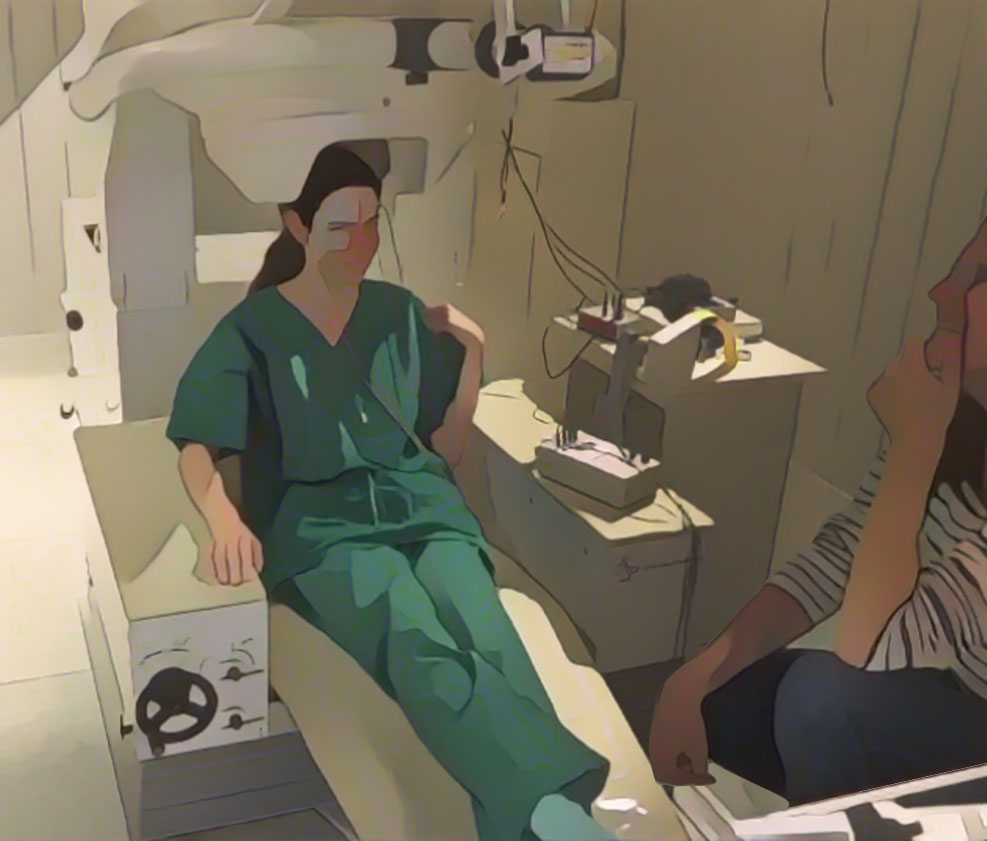
The MEG Core enables non-invasive brain imaging with millisecond precision, capturing whole-brain neural dynamics to advance research in cognition, perception, and behavior.
The MEG Core Structure at CoBIC provides state-of-the-art infrastructure for non-invasive investigation of human brain activity with millisecond temporal resolution and whole-brain coverage. The facility houses a SQUID-based MEG system within a magnetically shielded room, enabling detection of femtotesla-level signals. Continuous head localization supports precise spatial alignment and accurate source reconstruction.
Embedded in a strong interdisciplinary and interinstitutional network connecting neuroscience, psychology, neurology, psychiatry, physics, and data science, the lab supports paradigms ranging from controlled cognitive tasks to naturalistic settings.
Comprehensive peripheral physiology monitoring—including eye tracking, cardiac, respiratory, and EMG recording—enable fully multimodal experimental designs.
The associated research group “Cognitive and Neural Dynamics” investigates how the brain encodes, predicts, and reacts to dynamic sensory environments. A central focus lies on temporal processing, predictive mechanisms, and large-scale neural interactions, including frequency-specific communication across cortical hierarchies. Complementary work explores sensorimotor synchronization — how the brain aligns its dynamics to external rhythmic structure. Emerging approaches such as neural fingerprinting capture individual-specific activity patterns based on stable connectivity and spectral signatures. Combining MEG, peripheral phsyiology, psychophysics and computational methods, the group develops quantitative approaches to characterize neural dynamics in both controlled and naturalistic contexts, linking fine-grained brain activity to behavior and advancing fundamental and translational neuroscience.
Methods
MEG-based electrophysiology and experimental methods:
• Whole-brain SQUID MEG CTF 275 Omega (millisecond resolution)
• Head modeling & source reconstruction (Polhemus digitization)
• Stimulus delivery & response devices (button boxes, pads, gamepad, knob)
• Multimodal recording (EOG, ECG, respiration, eye tracking)
Group members
Prof. Dr. Georgios Michalareas
Professor of Magnetoencephalography; Head of MEG Core Structure
MEG Laboratory, Cooperative Brain Imaging Center (CoBIC), Goethe University Frankfurt, Germany
+49 (0)69 6301-83193
michalareasmed.uni-frankfurt.de

Dr. rer. nat. Anya Dietrich
Senior Scientist
MEG Laboratory, Cooperative Brain Imaging Center (CoBIC), Goethe University Frankfurt, Germany
+49 (0)69 6301-83193
a.dietrichmed.uni-frankfurt.de
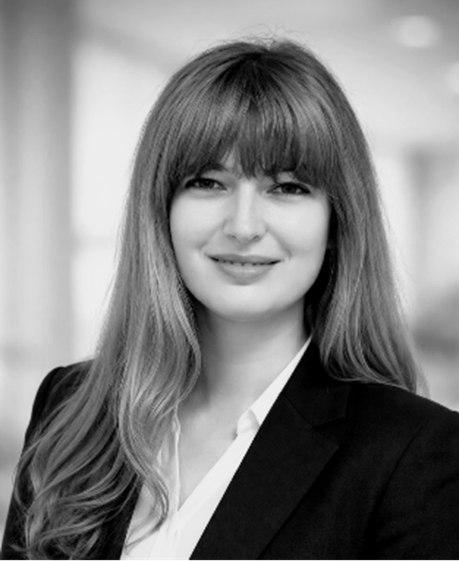
Anya Dietrich is staff scientist at CoBIC, Goethe University Frankfurt. Studies neural dynamics of emotion, cognition, and resilience, focusing on neural fingerprinting and electrophysiological biomarkers using EEG/MEG and fMRI. Expertise in experimental research, analysis of neural data, and methodological training. Active in interdisciplinary collaborations, science communication, and outreach.
Dr. Yue Sun
Postdoctoral Researcher
MEG Laboratory, Cooperative Brain Imaging Center (CoBIC), Goethe University Frankfurt, Germany
+49 (0)69 6301-83193
sunmed.uni-frankfurt.de
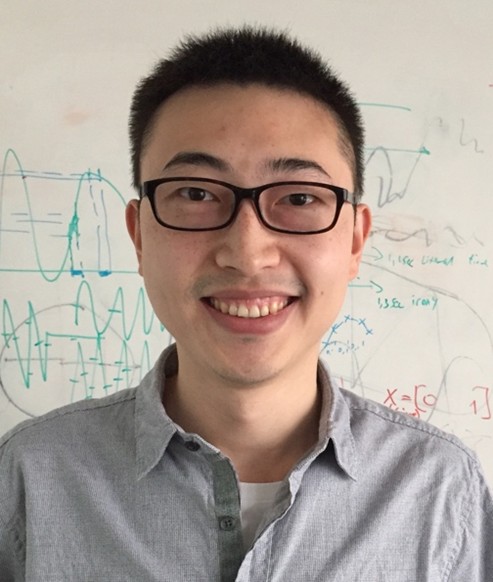
Yue Sun is a postdoctoral researcher at MEG Laboratory, CoBIC. He received his PhD in Cognitive Science from Université Paris VI, in France. His research focuses on the neural mechanisms of speech perception, phonological processing, and sensorimotor synchronization, using behavioral methods and neuroimaging techniques such as MEG. He previously worked at the Ernst Strüngmann Institute for Neuroscience and the Max Planck Institute for Empirical Aesthetics.
Marlon Schütz
MT-R (Medical Technician – Radiology/ Radiology Technologist)
MEG Laboratory, Cooperative Brain Imaging Center (CoBIC), Goethe University Frankfurt, Germany
+49 (0)69 6301-83193
ma.schuetzmed.uni-frankfurt.de
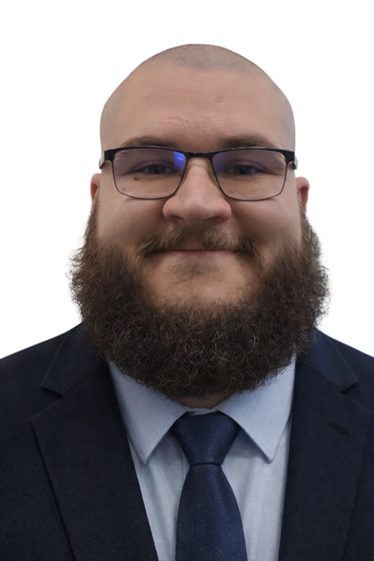
Marlon Schütz (he/him) is a Senior Radiological Technologist at the MEG-Lab of the Goethe-University Frankfurt. He first completed a state examination from the School of Medical Technologists at the Frankfurt Höchst Clinic, graduating in 2017. Having previously gained experience in Computer Science, he is currently pursuing a Bachelor’s in English Studies and Philosophy. Prior to joining the MEG-Lab, he worked as a Student Research Assistant at the Max Planck Institute for Empirical Aesthetics and as a Radiological Technologist for the company RNS at the St. Elisabethen Hospital Frankfurt.
Tea Bogdanovic
student assistant
MEG Laboratory, Cooperative Brain Imaging Center (CoBIC), Goethe University Frankfurt, Germany
+49 (0)69 6301-83193
bogdanovicmed.uni-frankfurt.de
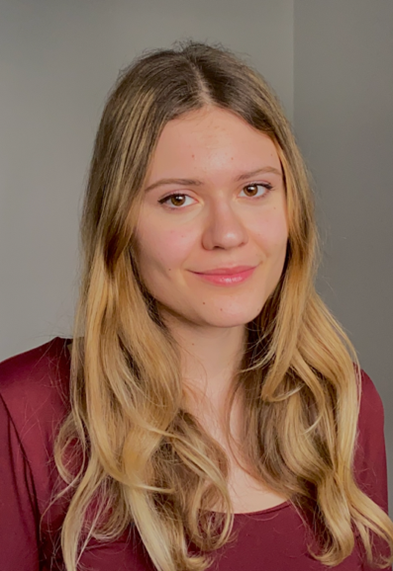
Tea Bogdanovic is currently working as a student assistant in the MEG lab, where she supports the experimental workflow. At the same time, she is studying Biology in Goethe University Frankfurt, aiming to specialize in Cognitive Neuroscience.
Mathias David Groothuis, B.Sc.
student assistant
MEG Laboratory, Cooperative Brain Imaging Center (CoBIC), Goethe University Frankfurt, Germany
+49 (0)69 6301-83193
s4579861stud.uni-frankfurt.de

Master student of Physics, Qualified User on Prisma 2 for fMRI measurements and HiWi in the MEG Core Structure, where I do Helium Refills and learn to do MEG measurements. Furthermore involved in lab documentation and implementation of new hardware and IT solutions.
EXTERNAL COLLABORATORS
Dr.med. Matthias Grabenhorst, Ph.D.
Postdoctoral Researcher
Ernst Strüngmann Institute (ESI) of the Max Planck Society, Frankfurt am Main, Germany
+49 (0)69 6301-83193
matthias.grabenhorstesi-frankfurt.de

Matthias Grabenhorst is a postdoctoral researcher at the Ernst Strüngmann Institute of the Max Planck Society. He studies fast cognition—processes too structured for reflexes yet too rapid for full deliberation—focusing on prediction, decision-making, and social interaction. Using psychophysics, computational modeling, MEG, and EEG, he links behavior to neural activity. His research seeks computational principles from fast cognition that support more complex processes across cognitive domains.