
Yee Lee Shing is a Professor of Developmental Psychology at Goethe University Frankfurt, where she is directing the Lifespan Cognitive and Brain Development (LISCO) lab. She is also a member of the IDeA research center of the DIPF (Leibniz Institute for Research and Information in Education). Yee Lee studied psychology in the US before moving to Germany to pursue her graduate studies at the Max Planck Institute for Human Development (MPIB) in Berlin, where she also obtained her PhD from the Humboldt-Universität zu Berlin in 2008. After some years as a postdoctoral researcher and subsequently a project leader at the MPIB, she took up a lectureship at the University of Stirling, Scotland in 2015. She returned to Germany since 2018 after accepting her current position at Goethe University Frankfurt. Research in her lab focuses on the development of cognitive and neural functioning across the human lifespan, with an emphasis on episodic memory.
Department of Psychology 1

The Fiebach Lab, LISCO Lab, and People's Labs are parts of the Department of Psychology of Goethe University Frankfurt. All labs utilize neuroimaging (EEG, MEG, MRI) and experimental methods to understand the neural foundations of human cognition.
- Behavioral Research (Psychophysics)
- EEG
- MEG
- s/fMRI
- Computational modeling/Neuro-AI
Lifespan Cognitive and Brain Development (LISCO) Lab
Research in the LISCO lab (PI: Yee Lee Shing) focuses on the development of cognitive and brain functioning across the human lifespan, with an emphasis on learning and long-term memory.
We are interested in how we turn experiences into long-lasting representations in the brain, both for details of specific events and regularities across events.
With the notion that lifespan development is embedded within environments and shaped by individuals’ experiences, one of our research focuses is to unravel the mechanisms through which environmental factors, such as formal school entry and stress-related social disadvantages, impact cognitive and brain development.
Our methodological approach is characterized by an emphasis on experimental (comparing cross-sectional group differences) as well as longitudinal (following individuals across time) studies. We utilize neuroimaging (structural and functional magnetic resonance imaging) and multivariate developmental methodologies (e.g., structural equation and latent growth curve modeling) to investigate the unfolding of brain–behavior relationships across time.
More details see: https://tinyurl.com/4zb5ydzw
Group members
Prof. Dr. Yee Lee Shing
Principle Investigator
Department of Psychology
Goethe University Frankfurt
+49 (0)69 798-35258
shingpsych.uni-frankfurt.de

Dr. Iryna Schommartz
Postdoctoral Researcher
Department of Psychology
Goethe University Frankfurt
+49 (0)69 798-35259
schommartzpsych.uni-frankfurt.de
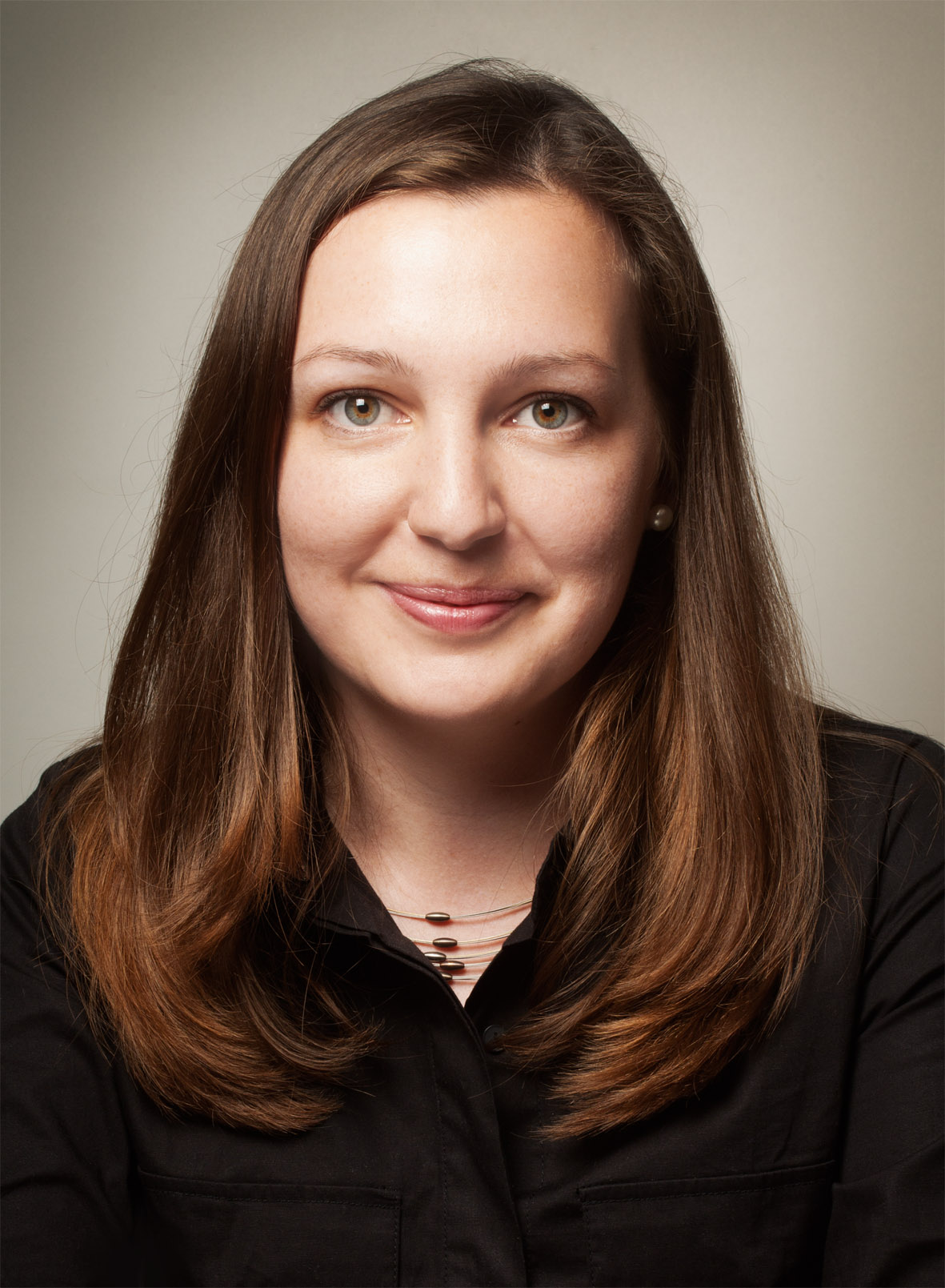
Iryna Schommartz is a postdoctoral researcher in the Lisco Lab, interested in mind (carbon and silicon) and brain. Her current interests are different forms of abstract representations. In the ARENA project she is examining the emergence of abstract representations in the form of categorical knowledge, how this interacts with episodic memory of specific experiences, and the age differences therein. She will incorporate fMRI-based neural measures with age-appropriate characterization of memories for generalization (i.e. categorical knowledge abstracted away from individual objects), tracking their emergence across training phases, and compare the representational structures from human data with those from AI models.
Dr. Dingrong Guo
Postdoctoral Researcher
Department of Psychology
Goethe University Frankfurt
+49 (0)69 798-35260
guopsych.uni-frankfurt.de
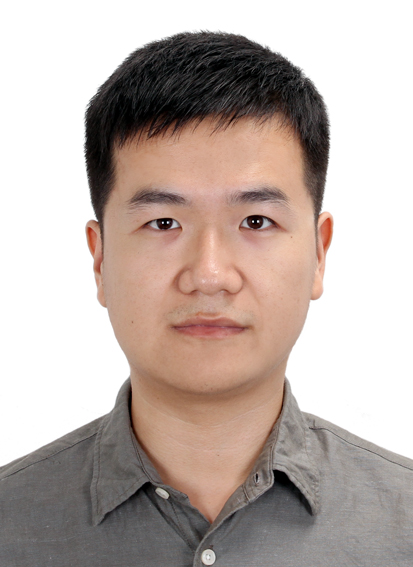
Dingrong Guo is a postdoctoral researcher in the Lisco Lab. His research focuses on how knowledge and schemas are organised in the human brain, and how this knowledge is used to perceive, predict, and interact with the environment (including artificial intelligence), particularly in decision-making and memory formation. He is also interested in how these cognitive and neural mechanisms change across the human lifespan, with a specific focus on ageing. To address these questions, he uses a multimodal approach that combines behavioural experiments, eye-tracking, and functional neuroimaging (3T and 7T fMRI).
Fiebach Lab
We investigate the neural foundations of higher cognitive functions such as language, working memory, cognitive control, and intelligence. Using modern brain imaging techniques including fMRI, EEG, and MEG, we examine how complex mental abilities are organized in the brain and how they support goal-directed behavior.
A central focus is on understanding basic building blocks of cognition and neurobiological sources of individual differences in abilities such as general intelligence and working memory capacity.
Our lab is located at the Psychology Department of Goethe University Frankfurt, and we are part of the Frankfurt Brain Imaging Center (COBIC). We are also associated with the Interdisciplinary Center for Neuroscience Frankfurt (ICNF), the Rhine Main Neuroscience Network (rmn2), and Frankfurt’s Center for Individual Development and Adaptive Education (IDeA).
Group members
Prof. Dr. Christian Fiebach
Principle Investigator
Department of Psychology
Goethe University Frankfurt
+49-69 798-35334
fiebachpsych.uni-frankfurt.de

Christian Fiebach is Professor of Neurocognitive Psychology at the Department of Psychology at Goethe University Frankfurt and the head of the Laboratory for Cognitive Neuroscience. His research focuses on the brain mechanisms underlying higher cognitive processing, ranging from word recognition and language processing to working memory and cognitive control processes regulating cognitive flexibility vs. stability. He is also studying neurobiological mechanisms underlying individual differences in general cognitive abilities, intelligence, and working memory. Christian is currently the speaker of the DFG funded Research Unit FOR 5368 “Abstract Representations in Neuronal Architectures”.
Dr. Cosimo Iaia
Postdoctoral Researcher
Department of Psychology
Goethe University Frankfurt
iaiapsych.uni-frankfurt.de
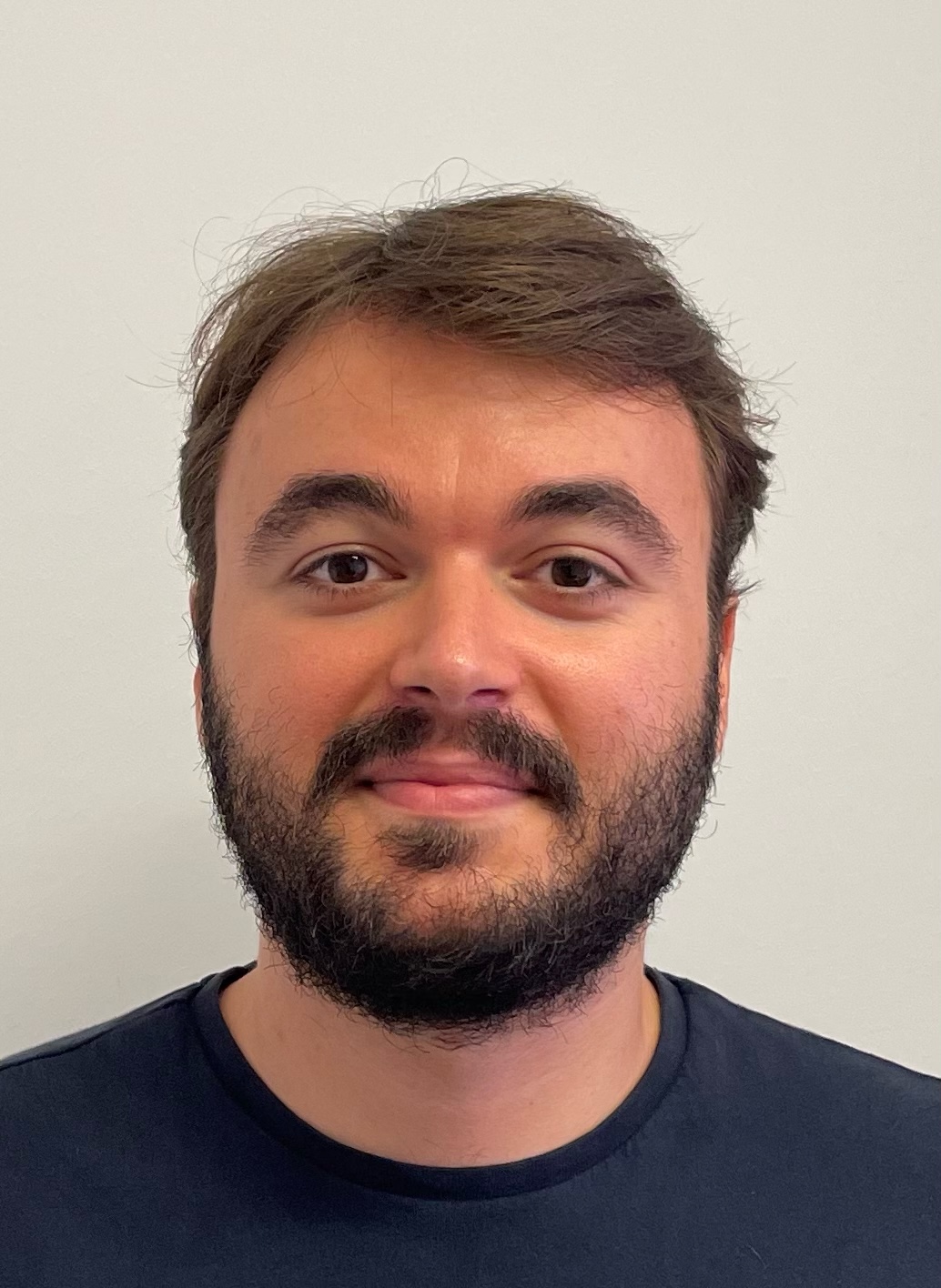
Cosimo Iaia is a postdoctoral researcher in the Fiebach Lab. As a trained linguist, his research interests lie in speech and language processing, at the intersection between NLP, AI, and cognitive neuroscience. Currently, he is part of the ARENA project (Abstract Representations in Neural Architectures) which investigates how the brain encodes different levels of knowledge abstraction by using Large-Language Models and other computational approaches. He is also interested in how the brain encodes/decodes sentence structure information over time.
People’s Lab
Research in the People’s lab group brings together approaches from neuroscience, linguistics, and artificial intelligence to investigate how the brain extracts complex information and represents uncertainty in time series data. A central goal is to understand the computations underlying probabilistic inference in the brain – the idea that neural systems represent and update beliefs about the world under uncertainty. We extend this framework to language by examining how hierarchically structured linguistic information is compressed into the speech signal and subsequently reconstructed during perception. In addition, we study how temporal dynamics support real-time language comprehension.
In parallel, we examine the role of noise (e.g., imperfect input) in perceptual inferences. Noise has traditionally been viewed as a limitation but it is increasingly understood as a fundamental component of neural computation.
Our current research focuses on signal and noise dynamics in probabilistic inference, temporal coding mechanisms for language comprehension, and the neural representation of syntactic structure.
We also examine the interaction between speech production and comprehension in natural conversation, the mechanisms by which the brain suppresses responses to one’s own voice, and whether continuous speech is represented as truly continuous or discretely structured.
Building on these directions, our future work will develop computational models of probabilistic inference and structured information to further advance our understanding of time series perception, and in particular neural language processing.
For more details see: https://github.com/peopleslab
Group members
Prof. Dr. Alessandro Tavano
Principle Investigator
Department of Psychology
Goethe University Frankfurt
+49-69-798-35254
a.tavanopsych.uni-frankfurt.de
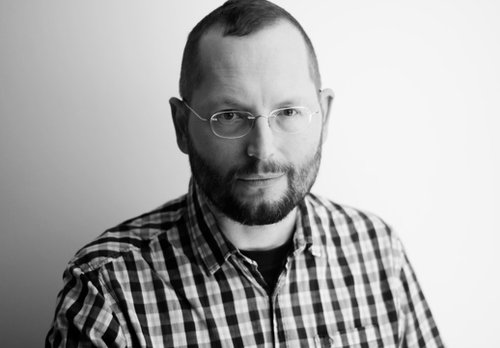
Alessandro Tavano is interim professor in General Psychology at the Department of Psychology at Goethe University Frankfurt and the head of the People’s Lab. His research focuses on the neural dynamics of communication, including predictive processing of stimulus time series using EEG/MEG and fMRI/fMRS, neural decoding of syntax and conversational speech tracking using EEG/MEG, brain-respiration coupling, and invasive recordings in animals. He currently leads the DFG project “A new framework for understanding the Dynamic Rhythms and Decoding of Speech” in collaboration with Dr. Léo Varnet, ENS (Paris).
Michael Ernst (M.Sc.)
PhD Student
Department of Psychology
Goethe University Frankfurt
ernstpsych.uni-frankfurt.de
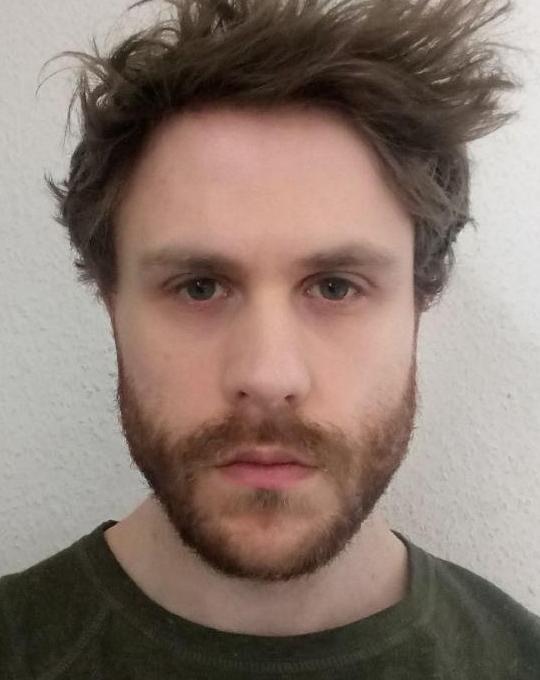
Michael Ernst is a PhD student and research assistant in the People’s Lab. With a background in neuro- and clinical psychology, he is interested in the dynamics of neural representation and information processing. Specifically, his work focuses on modeling and disrupting the dynamics inherent to speech and language, and on studying how human perception depends on these factors. To this end, he relies heavily on prominent neuroimaging techniques such as MEG/EEG and (f)MRI. Michael also has a dedicated interest in open science, digital literacy, and higher education. He has led the DiLER (Digital Literacy in Empirical Research) project through two funding rounds, financed by Goethe University Frankfurt.
Hakam Neamaalkassis (M.Sc.)
Department of Psychology
Goethe University Frankfurt
neamaalkits.uni-frankfurt.de
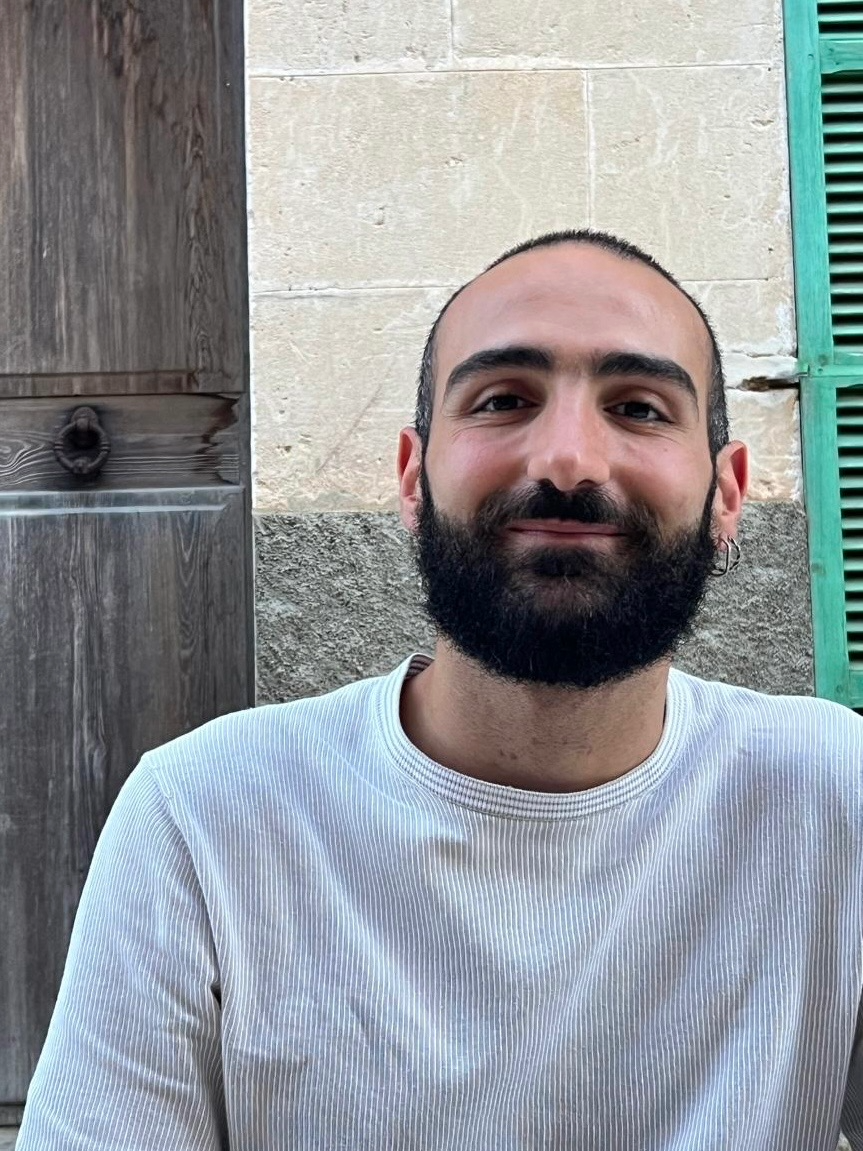
Hakam Neamaalkassis is a doctoral student with a background in psychology and cognitive neuroscience, working on sensory–motor coupling in the auditory domain. His research examines how motor processes, particularly vocal production, shape the neural dynamics of pitch perception. Current projects focus on testing whether self-generated vocalisations modulate passive frequency processing, with the goal of investigating feedback-driven perceptual plasticity. He employs controlled behavioural paradigms in both humans and ferrets to enable cross-species investigation of underlying mechanisms. His methodological approach combines behavioural designs with electrophysiological and imaging techniques, including EEG and functional ultrasound imaging (fUS), to characterise the spatiotemporal dynamics of auditory–motor interactions.
Felix Körber (M.Sc.)
Research Assistant
Department of Psychology
Goethe University Frankfurt
koerberpsych.uni-franfurt.de

Felix Körber is a graduate student at the People’s Lab with a background in psychology and interdisciplinary neuroscience. His research focuses on language processing and pattern separation in the context of predictive coding. He currently investigates auditory predictions using information transfer measures across scales, ranging from neuroimaging of translational organisms to neuronal compartmental simulations. Previously, he also explored transformer-based approaches for language decoding in neuroimaging data.
Jannika Hollmann (B.Sc.)
Research Assistant
Department of Psychology
Goethe University Frankfurt
J.Hollmannem.uni-frankfurt.de
Jannika Hollmann is a master’s student and research assistant at the People’s Lab, currently studying clinical psychology and psychotherapy. Her research focuses on language processing in natural conversations. Currently, she investigates the continuity of speech across languages.