Markus Aswendt studied Biochemistry and Neuroscience at the Martin Luther University Halle-Wittenberg and the Otto von Guericke University Magdeburg from 2006-2009 before completing a molecular imaging and experimental neuroscience PhD in 2013 at the Max Planck Institute for Neurological Research Cologne (supervisors: Prof. Klaus Reymann and Prof. Mathias Hoehn). Supported by a DFG grant and a Max Kade stipend, he continued postdoctoral training in Cologne and the Stanford University – Department of Neurosurgery (Director: Prof. Gary Steinberg). From 2017 to 2025 he led an independent research group funded by the Friebe Foundation at the University Hospital Cologne, Department of Neurology (Director: Prof. Gereon R. Fink), and was a guest researcher at the INM-3, Forschungszentrum Jülich. In addition, he served since 2024 as head of the Neuro-MRI core facility in Cologne. In October 2025, Markus Aswendt started as W2 Professor for Experimental Stroke Research and Neuromodulation at the Goethe University Frankfurt and leads the Experimental Neurology Section at the Center of Neurology and Neurosurgery, University Hospital Frankfurt. He is an associated PI at CoBIC.
University Hospital Frankfurt, Department of Neurology
Group Experimental Neurology – Markus Aswendt
Our research investigates the mechanisms of functional recovery after stroke using advanced preclinical MRI in mouse models. We combine longitudinal in vivo imaging with behavioral testing and histological validation to understand how brain structure and functional networks reorganize after ischemic injury and how these processes relate to recovery.
A central component of our work is longitudinal structural and functional MRI, enabling non-invasive monitoring of lesion development, brain plasticity, and network reorganization over time.
These studies aim to identify imaging biomarkers of recovery and treatment effects in experimental stroke models (e.g. DOI https://doi.org/10.1007/s12975-020-00802-3, DOI https://doi.org/10.1172/jci162253).
Group Translational Neurophysiology – Caroline Tscherpel
Our research is focused on reorganization and recovery of function after stroke and the use of non-invasive neuromodulation techniques to enhance neural plasticity.
To this end, we combine innovative neurophysiological and neuroimagine methods such ultra-high resolution MR imaging and TMS-EEG with behavorial assessments to understand the underlying processes of recovery and reorganization after stroke (e.g. Tscherpel C, Mustin M, Massimini M, et al. Local neuronal sleep after stroke: The role of cortical bistability in brain reorganization. Brain Stimulation. 2024;17(4):836-846. doi:10.1016/j.brs.2024.07.008; Tscherpel C, Dern S, Hensel L, Ziemann U, Fink GR, Grefkes C. Brain responsivity provides an individual readout for motor recovery after stroke. Brain. 2020;143(6):1873-1888. doi:10.1093/brain/awaa127.
Furthermore, we integrate this knowledge to develop new therapeutic strategies particularly including non-invasive brain stimulation techniques to facilitate recovery of function after stroke.
Group Experimental Neurology
Prof. Dr. Markus Aswendt
Head Experimental Neurology Section
Center of Neurology and Neurosurgery
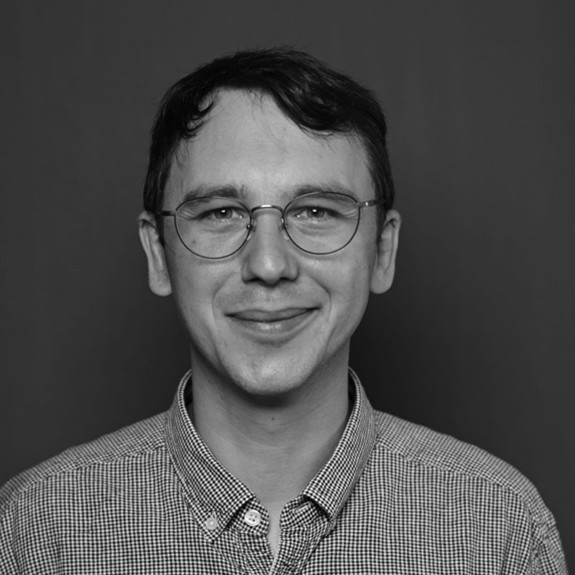
Group Translational Neurophysiology
Dr. med. Caroline Tscherpel
Head Translational Neurophysiology
Center of Neurology and Neurosurgery

Caroline Tscherpel (Content follows)